
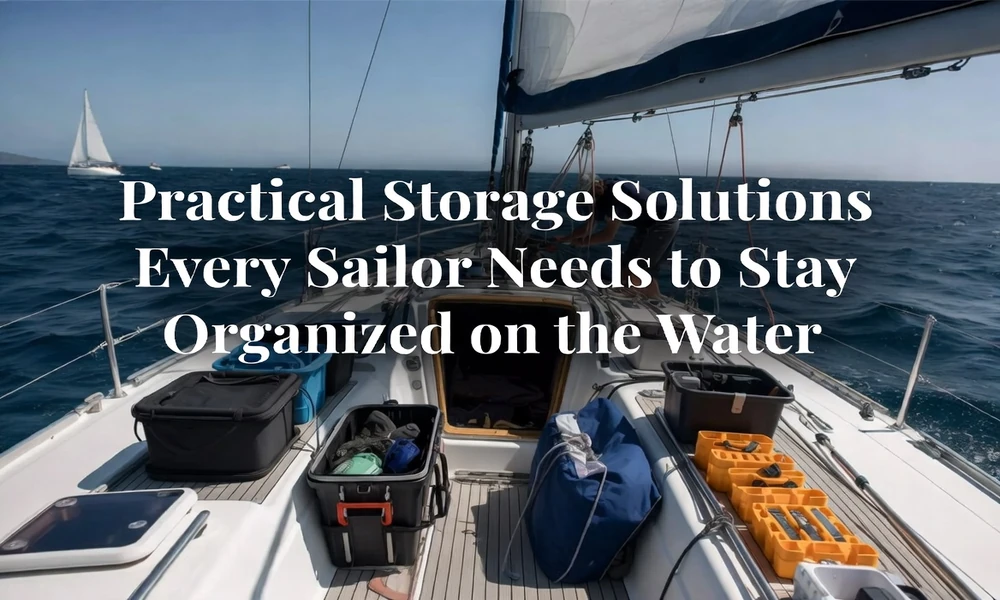

Every sailor knows the feeling. You’re heeled over in a freshening breeze, you need a specific line or a jacket or a snack, and it’s buried somewhere in the chaos below – or worse, sliding around the cockpit sole. Sailing is one of the most rewarding ways to spend time on the water, but it comes with a constant, low-level organizational challenge that can turn a beautiful day into a frustrating one.
The good news? Staying organized on a sailboat isn’t about having a bigger boat or spending a fortune. It’s about smart, practical storage solutions and a few good habits. Whether you’re a weekend day-sailor or heading out for longer coastal adventures, this guide covers the organization strategies that make sailing smoother, safer, and a whole lot more enjoyable.
Why Organization Matters More on a Sailboat
A sailboat is a uniquely demanding environment for keeping things in order. Unlike a powerboat that mostly sits flat, a sailboat heels, pitches, and rolls – and everything aboard responds to those forces. Add limited space, exposure to weather, and the need to move quickly when conditions change, and organization stops being a nicety and becomes a genuine part of good seamanship.
Consider what disorganization actually costs a sailor:
- Safety risks – loose gear becomes a projectile or a tripping hazard when the boat heels or a squall hits.
- Lost time – fumbling for gear you need right now, when a fast reaction matters, is more than annoying.
- Damaged equipment – gear that slides, bangs, and gets wet wears out or fails far sooner.
- Stress – clutter is mentally draining and pulls your focus from the sailing itself.
Get organization right and the opposite becomes true: the boat feels calm, capable, and ready for whatever the day brings.
Deck and Cockpit Organization
The cockpit is your command center, and it’s where organization pays off most visibly. It’s also the most exposed part of the boat, so everything here has to be secure and weather-ready.
Taming the lines
Nothing looks – or feels – more chaotic than a cockpit full of tangled lines. A few simple solutions keep them under control:
- Line bags or rope buckets mounted near winches and clutches catch tails and keep them from tangling underfoot.
- Bungee organizers along the coaming corral loose ends quickly.
- Consistent coiling and hanging habits mean every line has a home and can be found instantly.
Small-item control
Winch handles, sunglasses, phones, snacks, sunscreen – the small stuff is what usually ends up rolling around or going overboard. Cockpit organizers, pouches, and dedicated holders keep these items secure and within reach. A winch handle pocket alone saves a surprising amount of frustration and the occasional expensive splash.
Keeping Gear Dry: Weather Protection That Works
Sailing means getting wet – spray, rain, and the occasional wave over the rail come with the territory. Protecting your gear from all that water is one of the most important jobs of a good storage system.
The essentials of staying dry
- Dry bags are a sailor’s best friend. Waterproof roll-top bags keep clothing, electronics, and valuables completely dry even if they end up sitting in a puddle in the bilge.
- Waterproof cases protect phones, cameras, and handheld electronics from the spray that finds its way everywhere.
- Sealed deck boxes give larger items a weatherproof home on deck without cluttering the cabin.
- Quick-dry storage for wet gear – a dedicated wet locker or hanging space – keeps soggy foulies from dampening everything else.
The principle is simple: assume everything on deck will get wet, and store accordingly. Anything that must stay dry goes in something waterproof, every time.
The Humble Boat Bag: A Sailor’s Secret Weapon
If there’s one piece of storage gear that punches above its weight for sailors, it’s a good boat bag. The right tote does an enormous amount of work: it carries your gear from car to boat, keeps essentials together and organized once aboard, and – if it’s well made – shrugs off salt, sun, and abuse for years.
What separates a great sailing tote from a flimsy one:
- Rugged, water-resistant materials that survive the marine environment.
- A structured shape that stands up on its own and doesn’t collapse into a heap when you reach in.
- Reinforced handles that won’t give out under a heavy, awkward load.
- Smart pockets and dividers that keep small items findable instead of lost in the bottom.
A good tote also earns its keep off the water. It carries your kit to and from the boat, keeps everything together in the car, and doubles as grab-and-go storage for the essentials you never want to be without – sunscreen, a hat, a spare layer, a water bottle, your phone in a waterproof pouch. Some sailors keep a permanently packed “boat bag” so heading out is as simple as grabbing it and going, with none of the last-minute scramble to remember what they need.
Because a tote is something you’ll use every single time you sail, it’s worth choosing one that’s genuinely built for the job rather than grabbing whatever canvas bag is lying around. This guide to the
best boat tote bags for boaters in 2026 breaks down what to look for and highlights options that hold up to real sailing life – a small investment that quietly makes every trip more organized.
Below-Deck Organization
Down below, space is precious and motion is constant, so a little organization goes a long way toward making the cabin livable and functional.
The galley
The galley is where organization matters most below deck, because you’re handling breakables and sometimes hot items while the boat moves:
- Non-slip liners keep plates, mugs, and cookware from sliding and rattling.
- Nesting cookware and collapsible items save enormous space.
- Secure, latching stowage for anything that could become a missile when heeled.
Personal gear
Clothing and personal items stay manageable with a few tricks: packing cubes to keep each crew member’s gear contained, hanging organizers for the odd shapes, and a strict “everything has a place” rule so nobody’s kit ends up scattered across the boat.
Sail and Rigging Storage
Sails and their associated gear present their own organizational puzzle. A folded headsail is bulky, a spinnaker in its sock is unwieldy, and the various sheets, halyards, and control lines all need homes. Handling them well keeps your sails in good condition and your deck clear.
- Dedicated sail bags keep each sail protected, identifiable, and easy to move. A sail flaked into its bag rather than stuffed lasts far longer.
- Sail ties and gaskets stow a lowered mainsail neatly on the boom and stop it spilling across the cockpit.
- A designated sail locker or forepeak space keeps spare sails out of the way but accessible when conditions change.
- UV protection for any sail left hoisted – a good sail cover or furling protection dramatically extends sail life.
Protecting your sails through smart storage isn’t just tidiness – sails are among the most expensive items aboard, and a little care in how they’re stowed saves serious money over the years.
Safety Gear: Organized to Save Lives
Of everything aboard, safety gear is the category where organization matters most, because the moment you need it, you need it instantly and without fumbling. Good safety-gear storage follows a few firm principles:
- Instant accessibility. Life jackets, flares, the first-aid kit, and fire extinguishers must be reachable in seconds, not buried under other gear.
- Everyone knows the locations. Every crew member – and ideally every guest – should know exactly where safety equipment lives before you leave the dock.
- Clearly marked. Label safety storage so it’s obvious even to someone who has never sailed your boat.
- Protected but not hidden. Gear should be shielded from the elements yet never so sealed away that it’s slow to reach in an emergency.
This is the one area where convenience of daily storage takes a back seat to speed of access. Organize your safety gear as if a stranger might have to find it in the dark – because one day, someone might.
Organization Habits That Keep It All Together
The best storage gear in the world won’t help if the habits aren’t there. A handful of simple routines keep a sailboat organized trip after trip:
- A place for everything. Assign every item a home so stowing and finding become automatic.
- Stow before you sail. Secure everything before leaving the dock, not after the wind pipes up.
- Reset at the end of each trip. A quick tidy before you leave the boat means you start fresh next time.
- Do a periodic purge. Boats accumulate stuff; regularly removing what you don’t use keeps space free for what you do.
These habits take minutes and save hours. More importantly, they turn organization from a constant battle into an effortless background system.
Matching Storage to Your Type of Sailing
Not every sailor needs the same storage setup, and one of the smartest things you can do is tailor your system to how you actually sail rather than copying someone whose sailing looks nothing like yours.
A day-sailor and a coastal cruiser have very different priorities:
- Day-sailors benefit most from quick-access organization – a good tote, cockpit pouches, and dry bags for the essentials you bring aboard and take home each time. Simplicity and speed matter more than deep storage.
- Weekend sailors need enough organized stowage for overnight gear, food, and a change of clothes, with a clear split between wet and dry storage.
- Coastal cruisers going out for longer stretches need the full system – secure below-deck storage, weather protection, provisioning space, and organization that holds up over many days.
- Racers prioritize weight and keep only essentials aboard, stowed low and central, with everything stripped that isn’t needed for speed.
There’s no single “right” setup – only the one that fits your sailing. Be honest about what you actually do on the water, and build your storage to serve that reality. A day-sailor who over-equips for an ocean crossing just carries dead weight, while a coastal cruiser who under-prepares spends the trip frustrated. Match the system to the sailing, and everything flows.
A Note for the Eco-Conscious Sailor
Many sailors are drawn to the water partly by a love of the natural world, and organization ties into that ethic more directly than you might expect. Well-stored gear lasts longer, which means less waste and fewer replacements heading to landfill. Secure storage means fewer items lost overboard to pollute the sea – every water bottle, flip-flop, and plastic bag that stays aboard is one that doesn’t end up in the ocean.
There’s also a purchasing angle. Choosing quality, durable storage products over cheap disposable ones is both better for the environment and better value over time – a single well-made dry bag or tote that lasts a decade beats a succession of flimsy ones that fail every season. Reusable containers cut down on single-use packaging aboard, and thoughtful provisioning storage reduces food waste. Sailing lightly on the planet and sailing well-organized, it turns out, are very often the same habit – which is a satisfying thing for any sailor who cares about the waters they travel through.
Final Thoughts: Organized Sailing Is Better Sailing
Sailing is meant to be a joy – the wind, the water, the quiet satisfaction of a well-trimmed sail. Disorganization chips away at that joy in a hundred small ways, while good organization gives it back. A tidy, well-stored boat is safer, calmer, and far more pleasant to spend time on.
Start with the essentials – dry bags, a solid tote, cockpit organization, and non-slip storage below – then build the habits that keep it all together. You’ll spend less time hunting for gear and more time doing what you came for: sailing.
Whether you’re looking to learn more about boating, buy a boat or yacht, rent a vessel for your next adventure, or find the right accessories for life on the water, US Nautics has you covered – with practical boating guides, boats and yachts for sale, and honest, hands-on reviews of the gear and accessories that matter most. It’s a genuinely useful resource to bookmark and keep coming back to as your time on the water grows.